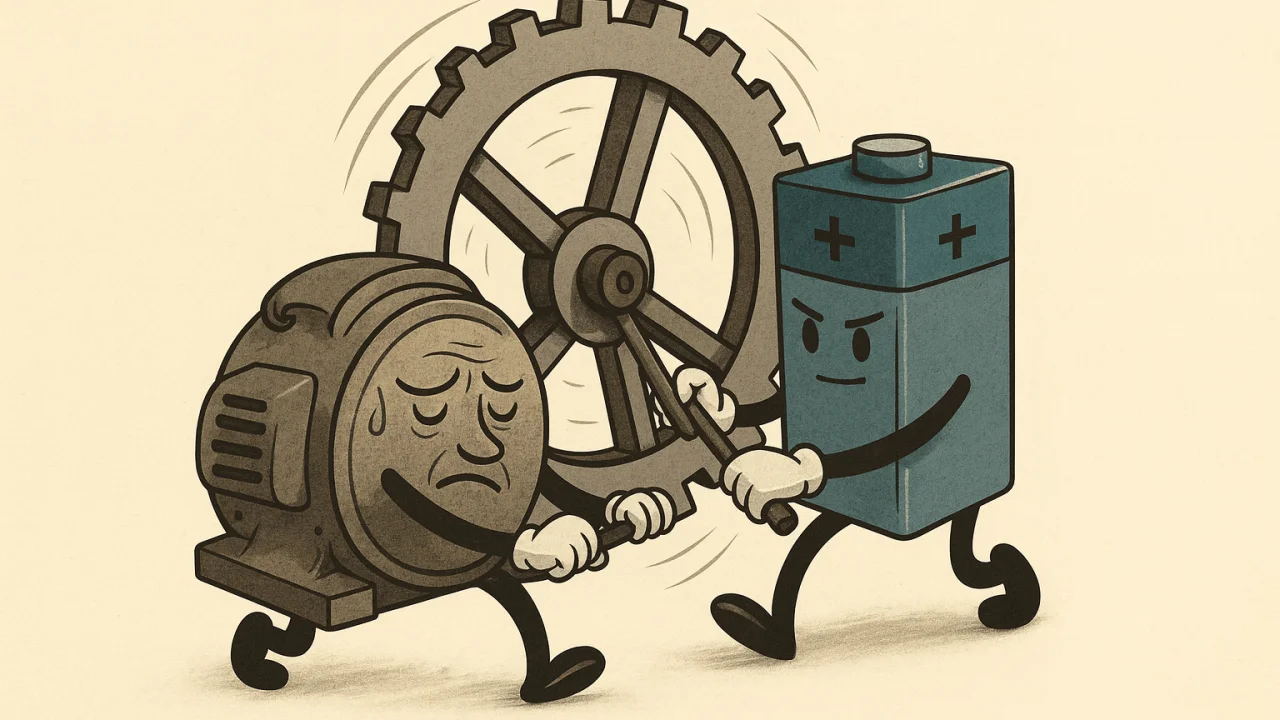
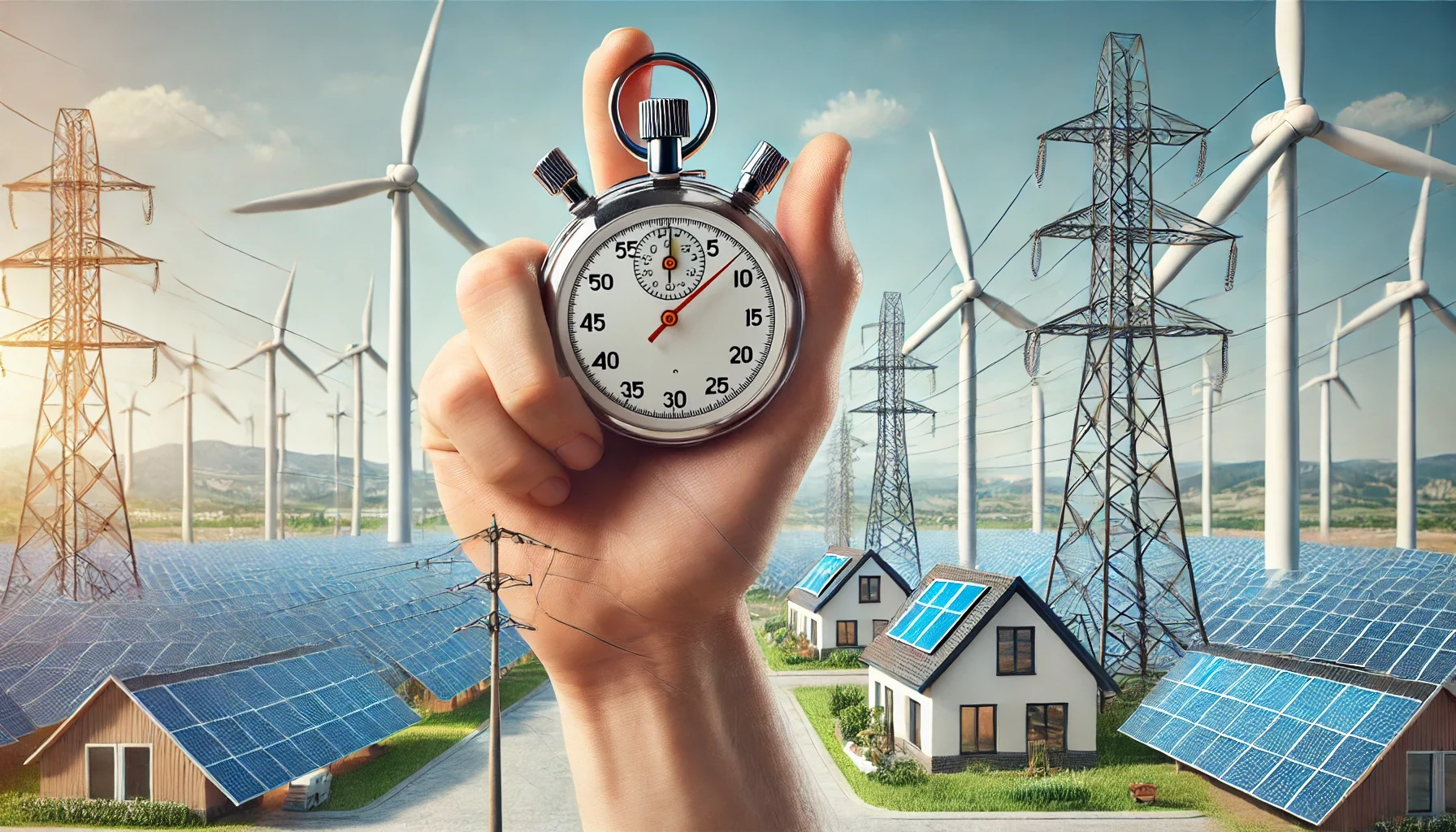
We already know how to generate cheap power. Now what?

Summary
- In 2015, solar and wind covered 25% of Spain's annual electricity generation; in 2025 they reached 56%.
- The challenge is no longer to generate clean and cheap power, but to absorb it: there is a surplus at midday and a shortfall at night.
- Grids, storage and interconnections are fifteen-year investments held back today by slow, unpredictable permitting. What is missing is regulatory stability and someone willing to decide knowing they will not see the result within their own term.
- With no organic demand growth (electric vehicles and hydrogen are running behind plan), Spain has to choose the demand it wants: battery manufacturing, electronics and processors, or data centres.
- One diagnosis was shared across the XI Energy Forum by elEconomista (Madrid, 9–10 September 2026): demand has to grow. There is still no agreement on how.
This week I attended elEconomista's Energy Forum. Oil companies, utilities, renewable developers, funds… People who rarely agree on anything and yet I left with the feeling that they were all describing the same electricity system.
I feel fortunate to have heard the analysis of genuine sector leaders first-hand. That is why I am not going to summarise what they explained perfectly on Wednesday 9 September. What follows is what stayed with me after reflecting on their sessions.
“The PNIEC is obsolete” because Spain is moving faster than the plan expected
Ten years ago we set ourselves a goal: to produce cheap, abundant energy. It is an achievement we have not internalised, and we still talk about it as if it were pending. In Spain we generate clean, cheap electricity. Over the past few days we have consistently broken records for negative-price hours and share of renewable generation, and all of it without another blackout. We have more solar capacity than we know how to absorb and one of the highest renewable shares in Europe. In 2015 solar and wind technology covered 25% of annual generation; last year we reached 56%.
Francisco Reynés (executive chairman of Naturgy) said it in the opening session: Spain's National Energy and Climate Plan “has become obsolete”. The plan was not a bad one; what happened is that the sector moved considerably faster than anyone expected when it was written, so it now works for checking whether you are meeting targets but not for deciding where to put the money. I liked how he framed it, because acknowledging that something has gone well while saying it no longer works as a reference is not easy in front of a full room.
At the large utilities panel, the first villain to appear was price. Loreto Ordóñez (chief executive of Engie Spain) opened with a less than optimistic analysis: next year we will see high prices, mainly because of geopolitical uncertainty feeding through to the gas price and because of low gas storage in Europe (around 75%). Maarten Wetselaar (chief executive of Moeve) added a little more: if geopolitics stays as it is, neither gas nor oil improves within six or nine months.
A megawatt hour of electricity costs us twice what it costs an American industrial user, and on top of that we make it more expensive with CO2 compensation.
At the renewables panel the tone was different but the complaint was similar. We still have price cannibalisation in solar PV, which is putting the brakes on investment in new projects. Laurent Clech (VINCI Energies Spain) recalled that the PNIEC development plans started from a level of demand that has not arrived, neither in electric vehicles nor in hydrogen.
And on both panels, in different words: electricity demand is not growing.
Why is electricity demand not growing in Spain?
I heard it as a single problem told three times. We have built a system that produces a great deal, very cheaply, in some hours, and we still depend on expensive imported gas in the rest. There is a surplus at midday and a shortfall at night, and what is missing is what we pay dearly for.
We are throwing away, in some hours of the day, the energy that costs us so much to produce in others. The challenge of generating clean and cheap power is solved. What is left is to make use of all the generation capacity we have. That changes the conversation quite a lot, because the answer to “how do I use what is left over” is no longer more panels. It is grids, storage, permits that unlock investment, demand that can move to the hours when the energy is actually there…
Energy is industrial capacity
Energy is industrial capacity. Josu Jon Imaz (chief executive of Repsol) explained that a European steelmaker pays in the order of up to nine times more for gas than its competitor outside Europe, and that with a gap like that, all we are doing is giving industry an incentive to move away.
The implications are almost absurd:
- the plant closes,
- production moves to India,
- 50% more CO2 is emitted there because of the inefficiencies of their processes,
- and then we import it, paying for the CO2 of the transport.
I do not know whether the solution is the one Imaz proposes (ending the payment for CO2 allowances in Europe), but we have to come up with something to make companies stay. What struck me most in his argument is that the United States has cut its CO2 emissions per unit of GDP by 40% without applying carbon taxes, while in Europe, with that measure, we have achieved 43%. I do not share all of his conclusions, but perhaps something is escaping us in Europe.
We cannot afford to be this short-termist. Reynés said it at the start and almost everyone repeated it: permitting is slow and unpredictable, and it holds back precisely the investment we need. Grids, storage, interconnections… are fifteen-year investments whose fruits someone else harvests, and that is why only the brave dare to take them on. What is missing is regulatory stability and someone willing to decide knowing they will not see the result within their own term.
Which industry do we want to consume more energy?
On Wednesday the diagnosis was clear: demand has to grow. What is not so clear is how. Organically it is not happening. Electric vehicles are moving more slowly than expected, hydrogen has not arrived, the industry we had is leaving… And all of this, which sounds like bad news, looks to me like an opportunity.
When demand does not come on its own, someone has the chance to decide what kind of demand we want. And we can take that decision as a country, bearing in mind that what we sow today we will harvest in fifteen years. Reynés said it about grids and interconnections, but it applies just as well to industry. We have an advantage few countries have — cheap energy at midday — and the question is what we turn it into. I see three candidates that some of the speakers also mentioned.
Battery technology and manufacturing
This is the most obvious one and the best fit: it consumes a lot, it manufactures exactly what the system itself needs in order to stop throwing energy away, and there are already projects announced. But for some reason they never quite get off the ground. My sense is that what is missing is clear direction from government and private investment that feels comfortable making fifteen-year bets under the current rules of the game.
Electronics and processors
It does not have to be this one, and I do not claim to know more than the people who work in it. But if we have an unfair advantage in cheap production capacity, why not invest it in the industries of the future instead of propping up those of the past? Fifteen years ago people questioned whether the United States, and Tesla in particular, could build cars to match the big European manufacturers. Over the last three years the Model 3 and the Model Y have been the two best-selling electric cars in Spain. When a private company backs a sector, it can reap the rewards on a medium horizon, but that only happens where there is conviction and legal certainty.
It is not one or the other. The state sets out which industry is in the country's interest and creates a framework that makes it attractive; the market, if that framework is stable, puts up the capital and takes the bet. Without that framework the plan stays on paper, like the PNIEC.
Data centres
This one is being decided today. We are choosing where to place enormous factories of a raw material that everyone seems likely to want. Mario Ruiz-Tagle (chief executive of Iberdrola Spain) said that data centres “are not an evil in themselves”, that it is the grid and the electricity sector that have to adapt to host that industry by making the most of Spain's competitive advantages, and that although a data centre creates little direct employment, there are satellite companies that do. And he finished: “we need them, and they will be built in Spain or outside Spain”. On the draft decree that will require large data centres to back 80% of their consumption with new, hour-by-hour certified renewables, he said those centres “will exist everywhere in the world” and that the investor's answer will be: “do not build in Spain — I am going to build in France and in Portugal, right up against the border”. In other words, we are going to consume the data either way; the difference is whether the jobs and the investment stay here or ten kilometres over the border. Gianni Armani (chief executive of Endesa) called it outright “an ideological decision”, and in the end the line most repeated in the room was the Spanish proverb: you cannot fence in the open country.
We are late
I left the forum with the impression that we are late. We have spent years arguing about how many gigawatts we install instead of asking which industry we want to come and consume what we already know how to produce. That would help us realise what we have to change so that, when someone has to choose between Spain, Portugal and France, it is not all the same to them.
Quotes are taken from my own notes and from elEconomista.es coverage of the XI Energy Forum (Madrid, 9 and 10 September 2026).