The shift to 15-minute (quarter-hourly) settlement periods in the Spanish electricity tariff
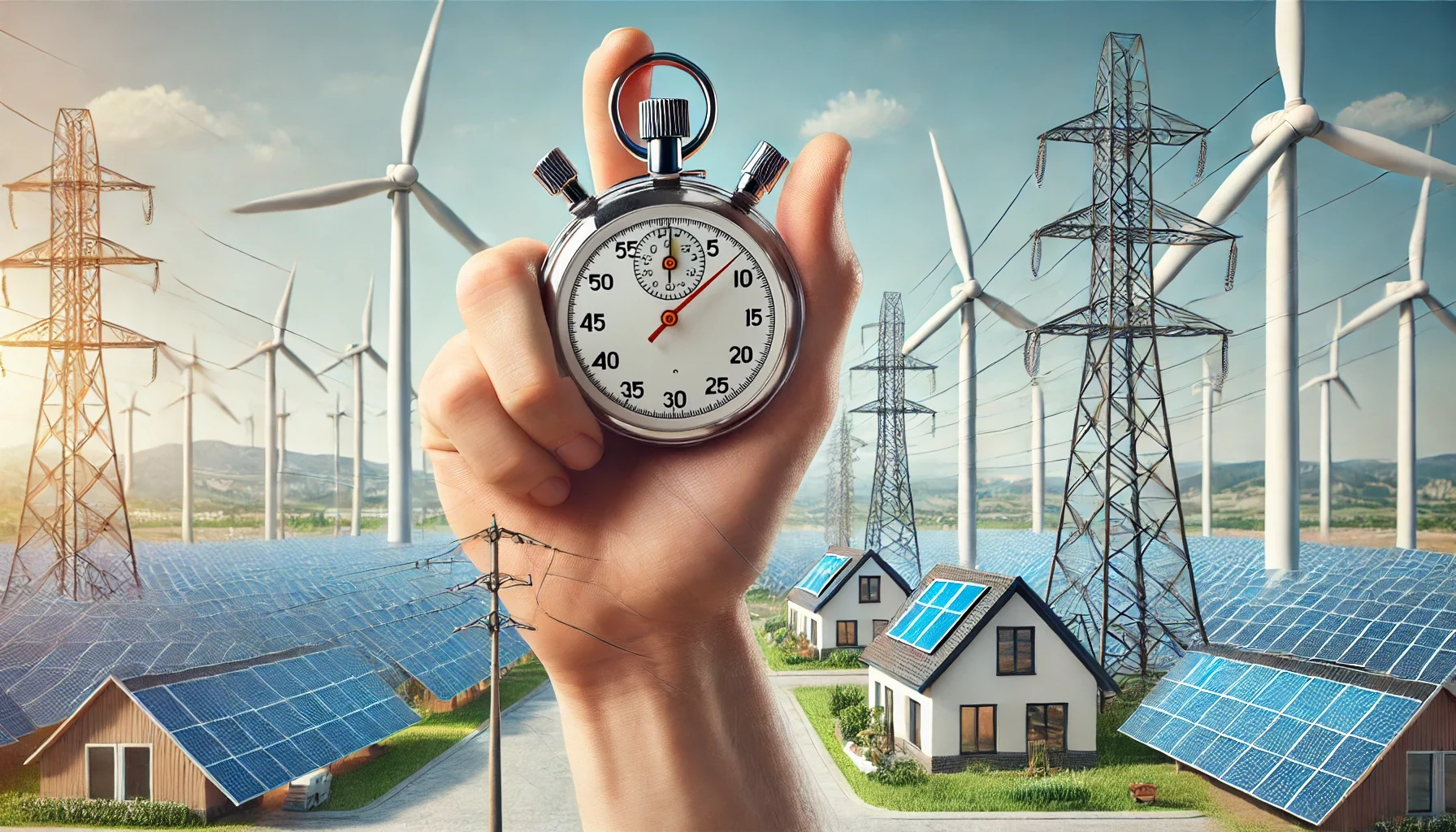
Spain is preparing to implement a major change to its electricity tariff system, moving from an hourly model to a quarter-hourly one. This new system, expected to come into force in the coming weeks, will mean that the price of electricity varies every 15 minutes rather than every hour. This shift to 15-minute periods, driven by European regulation, aims to improve the efficiency of the electricity market, make better use of renewables and reflect fluctuations in energy supply and demand more accurately. It is one of the most significant changes in the history of the Spanish and European electricity market, and it seeks to improve energy efficiency and the use of renewable energy.
What does the quarter-hourly or 15-minute system involve?
At present, the Spanish electricity market sets 24 prices a day, one for each hour. With the adoption of the quarter-hourly system, 96 different prices will be set each day, corresponding to 15-minute intervals. This greater granularity will allow prices to reflect variations in electricity generation and consumption more accurately, which is especially relevant given the growing integration of renewable energy, whose generation can be more variable and less predictable.
The quarter-hourly or 15-minute system, also known as ISP15 (Imbalance Settlement Period 15), means that:
- The wholesale electricity market will move from 24 different prices in a day to 96 periods.
- Energy trading in the day-ahead and intraday markets will take place in 15-minute intervals (moving from MTU60 to MTU15). The change in the intraday market would take place on 18 March and that of the day-ahead market on 11 June.
- Imbalance settlement will also be carried out every quarter of an hour.
The change is being made in compliance with Regulation (EU) 2017/2195 and Regulation (EU) 2019/943, which aim to harmonise the functioning of balancing markets, improve the efficiency of the electricity system and encourage the integration of renewables. It was originally scheduled to take effect from 1 January of this year, 2025, but given its technical complexity it will become operational in mid-March or early April. It requires coordination between OMIE (the Spanish electricity market operator) and Red Eléctrica (the system operator), that is, between the manager of energy prices and the manager of its distribution.
Reasons for the shift to the quarter-hourly system
The implementation of the quarter-hourly system responds to several objectives:
- Greater efficiency: it allows energy supply and demand to be matched more accurately, which is especially important given the growing presence of renewable energy.
- Cost reduction: system imbalances, and therefore operating costs, are expected to fall.
- European integration: Spain aligns itself with European standards, enabling more effective and economical energy exchange, in response to the requirements of the European balancing Regulation of 2017 and 2019.
- Promotion of sustainability: it favours the integration of renewable energy into the electricity system.
Who is affected by the shift to the quarter-hourly system
This change will have a significant impact on several players in the electricity sector:
- Consumers on the regulated tariff (PVPC): more than 8 million users will see their prices affected, since this tariff is linked to wholesale market prices.
- Energy producers: especially renewable energy installations.
- Utilities and direct consumers: they will need to adapt their systems and energy purchasing strategies.
- Market (OMIE) and system (REE) operators: which have had to adjust their processes and information systems.
It is worth noting that, for now, small consumers' meters will remain hourly, so the change will mainly affect the wholesale electricity market and large energy consumers who already have metering equipment adapted to the quarter-hourly system. In the case of small consumers (households and SMEs), their meters are not adapted to readings every 15 minutes, so their hourly consumption will be accessed and interpolated to obtain quarter-hourly consumption.
Self-consumption installations also pose a problem for metering processes. Although they can measure energy in quarter-hourly intervals, the Royal Decree on Self-Consumption requires that calculations of energy purchased, generated, exported and self-consumed be carried out on an hourly basis. This means that hourly energy figures are first used to perform the calculations and then interpolated to obtain the quarter-hourly values, which can seem paradoxical.
Challenges and considerations of the quarter-hourly system
The transition to the quarter-hourly system is entailing a number of significant challenges:
- Technological adaptation: it has been necessary to update the information systems of the distribution companies and the system operator.
- Complexity for consumers: the increase in time bands could make understanding and managing electricity consumption more difficult.
- Coordination in implementation: there is reasonable concern about a possible lack of synchronisation between quarter-hourly trading in the market and imbalance settlement.
The shift to 15-minute periods raises some important questions and challenges for both users and utilities:
- For users: is now the time for a tariff on the open market (to avoid risks) or on the regulated market (to seek out the opportunity of cheap time bands)?
- A challenge for utilities: if they can get their customers to consume during the cheapest time bands, they will achieve greater profitability on the energy sold while also helping their customers to save.
- For utilities and users: it is the moment for batteries and smart charging, increasing the opportunities to improve profitability through charging and discharging.
In conclusion, the shift to the quarter-hourly or 15-minute system represents a significant step towards a more efficient and sustainable electricity market in Spain. Although it poses adaptation challenges, in the long term it is expected to benefit both the electricity system and consumers, enabling better management of energy resources and a reduction in costs.