The renaissance of the relationship between utilities and consumers

The European energy landscape is undergoing a radical transformation, and utilities find themselves at the eye of the storm. I recently attended Future of Utilities (Amsterdam) and the EnergyTech Summit (Bilbao), two events that offered a privileged insight into the future of the relationship between utilities and customers. These gatherings not only delved into technology, but also brought to the fore the evolving role of the consumer in the new energy ecosystem.
1. From selling energy to offering experiences: reinventing the customer journey
One of the most recurring messages at both events was clear: consumers no longer seek only energy, but experiences, trust, control and purpose. Gentrack's report summed it up perfectly: "the business is no longer about meter-to-cash, but about product-to-profit".
The most innovative utilities are completely redesigning their value proposition, centring their strategy on the user. From automating onboarding, to the dynamic personalisation of tariffs, through to intelligent support and the integration of digital and physical services.
According to IDC, 44% of utilities regard customer experience (CX) transformation as a strategic priority. This transformation seeks not only to reduce churn, but also to open up new revenue streams through non-energy products. Leading utilities are investing heavily in CRM and CIS systems and customer experience platforms, and the majority, 64%, plan to renew their systems within the next two years.
Octopus Energy, for example, showed how it has activated more than 1,6 million customers in energy-saving sessions over the winter. In a single winter event more than 250.000 users took part, achieving an average saving of 12% in consumption, with two thirds of participants actively reducing their usage. This translated into 3 million pounds saved on bills and 14.000 tonnes of CO2 avoided.
2. Home energy management as the cornerstone of loyalty
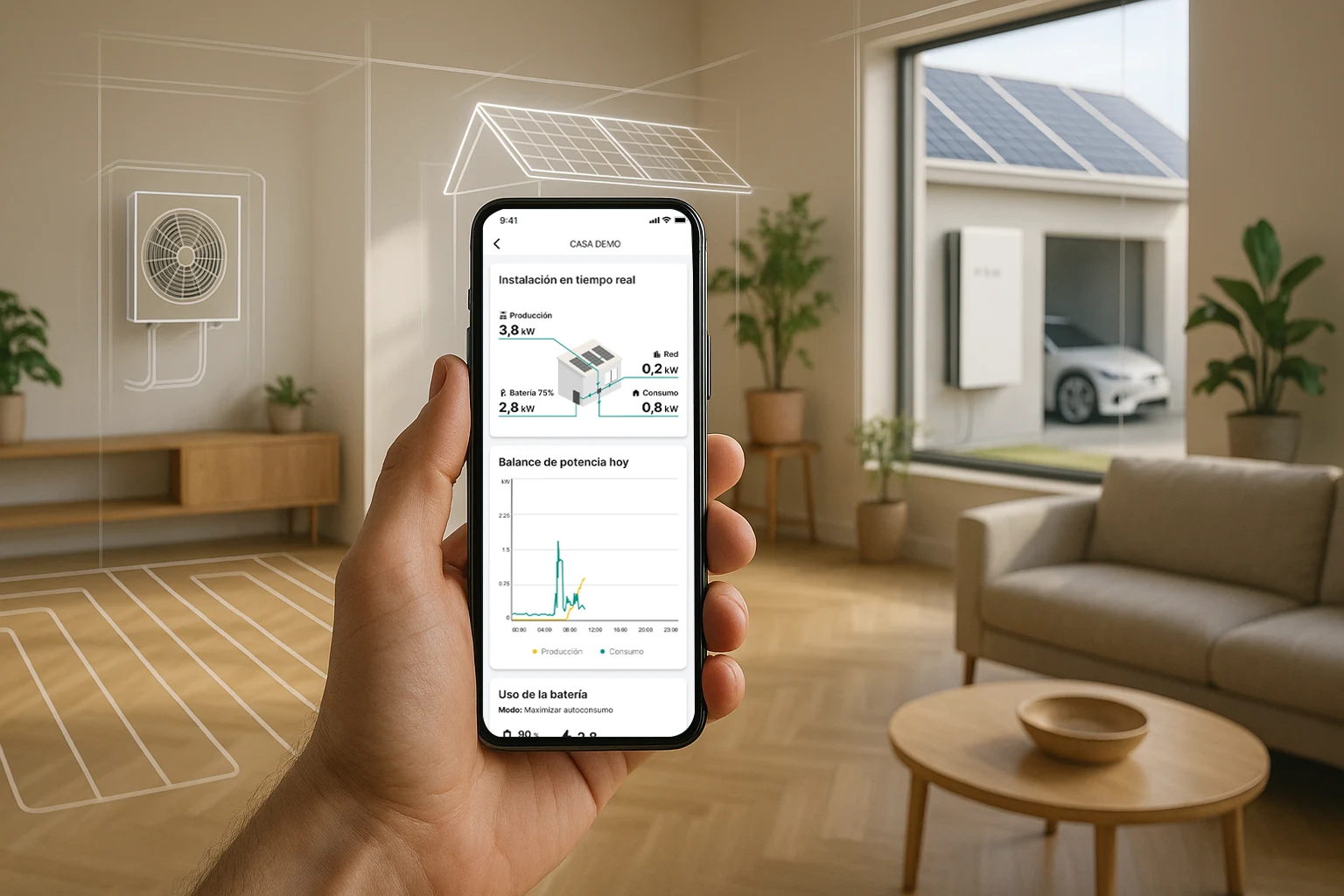
Home energy management is consolidating as one of the pillars of customer loyalty. From smart meters to apps that integrate batteries, solar panels, chargers and dynamic tariffs. The home becomes a space of continuous interaction between customers and the utility. Cases such as Amber in Australia show the potential of giving real-time access to the wholesale market price to empower the consumer.
But for this to work, we must understand that not all customers are the same. An interesting point of debate in Amsterdam was segmentation. Gentrack argued for active segmentation: vulnerable, basic, advanced… while Kraken questioned this approach, arguing that customers are increasingly dynamic and that we must respond in real time. Regardless of the approach, the consensus was clear: value must be delivered to every segment. From the vulnerable user to the most advanced prosumer.
In addition, freemium models (basic services free for all) and premium services for prosumers are being explored, with monthly reports, export alerts or personalised optimisation recommendations.
3. Flexibility and prosumers: the great challenge (and opportunity) of the decade
In Europe, flexibility is already a reality: it is estimated that by 2030 there will be more than 330 million flexible household devices, including more than 75 million electric vehicles, 60 million heat pumps and 75 million solar and battery systems.
However, monetising that flexibility is not yet straightforward. There are three main mechanisms:
- Energy arbitrage: buying cheap and selling expensive on the wholesale market (day-ahead and intraday).
- Balancing services: revenue from ancillary services to the system (aFRR, FCR, DFS, etc.).
- Capacity markets: securing stable revenue over time in exchange for contracted capacity (T1, T4).
By combining these revenue streams, the payback of a battery can be reduced from 12 to 6 years, a difference that completely changes the adoption equation.
The challenge, however, is not only technical but one of customer activation. Flexibility without engaged users has no value. And that is where utilities can play a key role.
In Spain, this path is yet to be travelled. Regulation has not yet clearly defined how households will be able to participate actively in flexibility. There is anticipation, but also uncertainty.
4. Utilities: the "right to win" in the distributed energy transition
A key reflection in Bilbao was that, although startups are pushing hard, utilities hold the "right to win" in this new energy era. They have the direct customer relationship, the databases, the scaling capabilities and an operational infrastructure that can be a great advantage if it is modernised.
Not all companies need to become VPPs. There is room for many value propositions: installation, integration, support, maintenance, education. But utilities have a unique asset: they can build the base of connected assets in homes and, from there, begin to monetise. This strategy is being adopted by leaders such as Octopus, Eneco and Tibber. First connect, then monetise. Not the other way round.
5. Europe vs Spain: two speeds
An inevitable conclusion: Europe and Spain are not advancing at the same pace. While northern Europe is rolling out flexibility and self-consumption schemes with active policies and regulation that rewards the active consumer, in Spain we still depend on business momentum and on regulation that is still unclear.
However, there are positive signs: the growing number of self-consumption installations, the interest in smart tariffs, and the rise of energy subscription models are indicators that something is moving.
Conclusion
The relationship between utilities and consumers is living through its own renaissance. It is no longer about sending bills, but about building a continuous, personalised and purposeful relationship. In a world of electrification, digitalisation and decentralisation, whoever manages to connect with the consumer through value and trust will lead the new energy market.
And that, as we learned in Amsterdam and Bilbao, is not a technological matter. It is a matter of vision.