BeClever, March 2025
Welcome to the March edition of BeClever, Clevergy's energy newsletter! As every month, we bring you the latest news from the energy sector. This month we cover the change to the quarter-hourly system in Spain, the 2024 generation results and the challenges of 2025, and the impact of climate change on the electricity system.
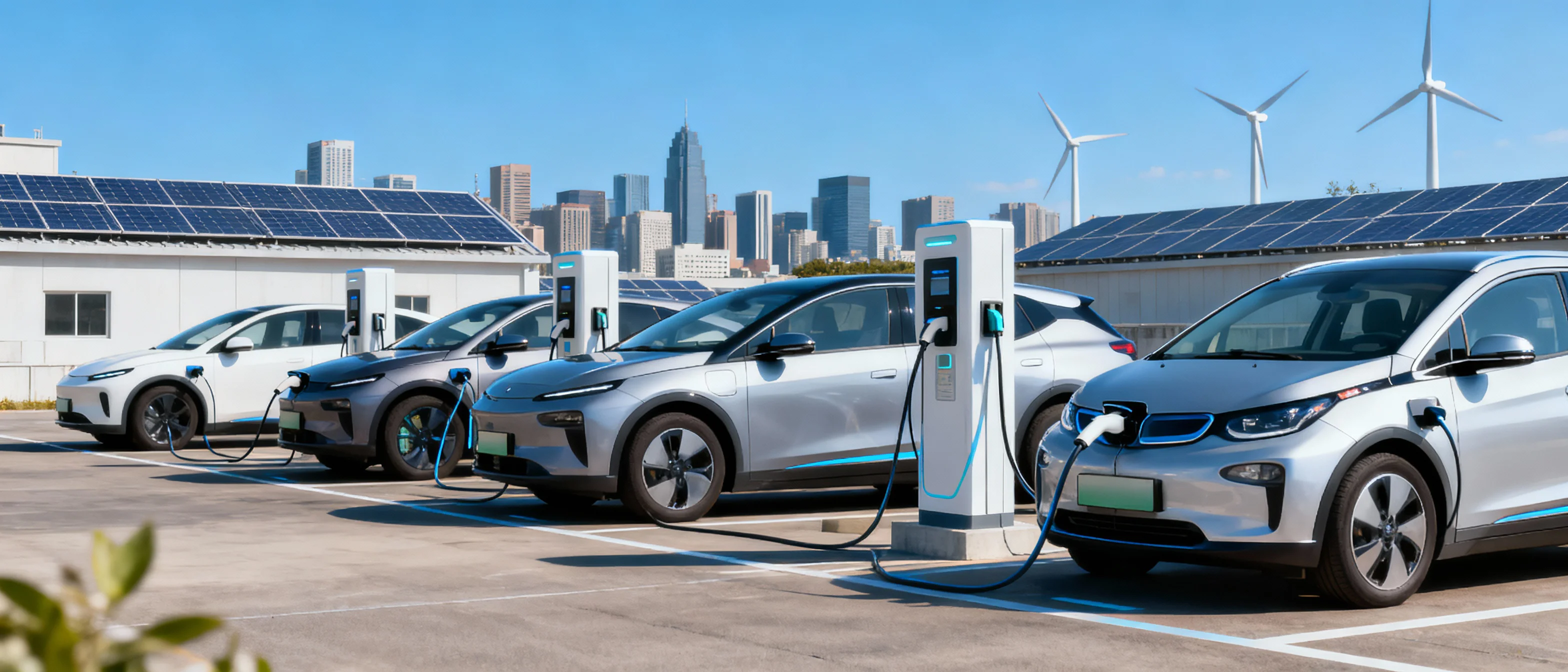
The change to the quarter-hourly system in the electricity tariff
These days one of the most important changes of recent years is taking place in the Spanish electricity market. It is the change in pricing, moving from the hourly system to the quarter-hourly system. This new system means that the price of electricity will vary every 15 minutes instead of every hour. This change to the fifteen-minute system, driven by European regulations, aims to improve the efficiency of the electricity market, improve the use of renewables and more accurately reflect fluctuations in energy supply and demand.
The change will mainly affect the wholesale electricity market, and large energy consumers who already have measurement equipment adapted to the quarter-hourly system. In the case of small consumers (domestic and SMEs), their meters are not adapted to readings every 15 minutes, so their hourly consumption will be accessed and this will be interpolated to obtain the quarter-hourly consumption.
Self-consumption installations also pose a problem in the measurement processes under the fifteen-minute system. Current regulations require hourly calculations that would then be interpolated to obtain quarter-hourly values.
From the success of 2024 to the great challenge of 2025
Red Eléctrica has just published the 2024 Spanish Electricity System Report, a complete overview of last year's electricity market, which ended with a 0.9% increase in demand compared to 2023, and with 56.8% of generation coming from renewable sources. Spain closed 2024 with renewable generation of 148,999 GWh (10.3% more than the previous year), the best figures to date. Wind leads with 23.2% of the national generation mix, followed by nuclear, with a 20% share, solar photovoltaic (17%), combined cycle (13.6%) and hydropower (13.3%) as the main technologies in our *mix*. The European average of energy from renewable sources rose in 2024 to 47%, an increase of 2.6 points compared to the previous year.
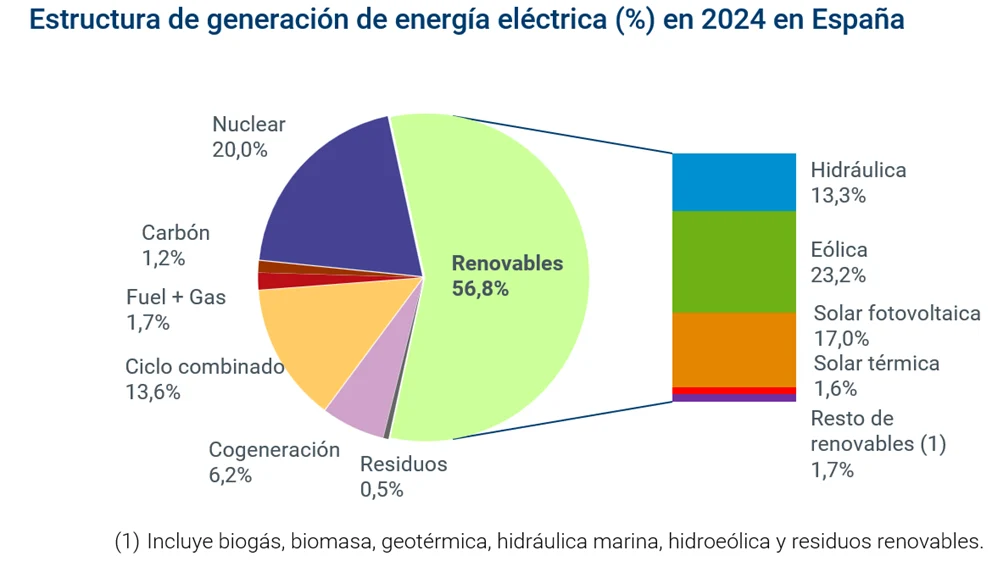
In 2024, 7.3 new renewable GW were installed in the Spanish electricity system (6GW in photovoltaic and 1.3 GW in wind). Taking these figures into account, and the 2024 Spanish Electricity System Report from Red Eléctrica.
Taking these figures into account, the percentage of renewable energy losses due to technical restrictions in the system, known as *curtailments*, was only 1.6%.
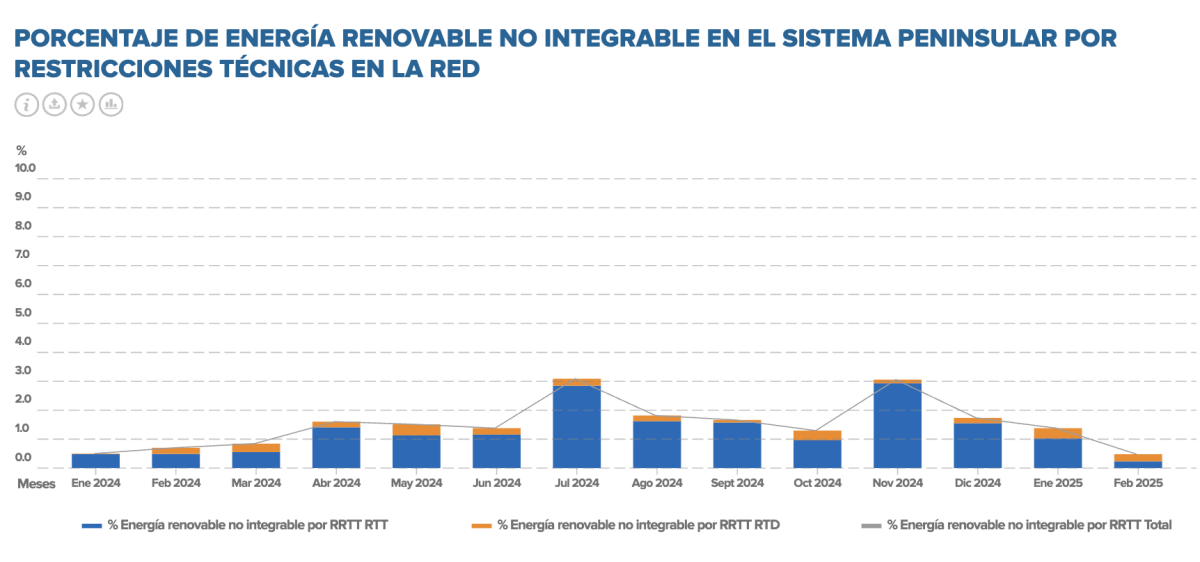
Although the figure is good, it is anticipated that 2025 will be a complicated year, and that we will hear a lot about *curtailments*, especially from now on with the arrival of spring and the increase in hours of sunshine, with photovoltaic power ready to generate a lot of energy that will not always be able to be used by the system. These imbalances fall within what is reasonable in the transition to renewables, but it is important to make progress on energy storage and interconnection installations to achieve maximum efficiency. They are also an opportunity for retailers who have digitalised and can actively participate in the flexibility market.
Climate change and its impact on the electricity system
The recent DANA (severe storm) in Valencia put our country's electricity system to the test, achieving great stability despite the significant damage suffered to infrastructure. It has also highlighted the need for investment and digitalisation of the networks, as discussed recently in the round table "The resilience of the electricity system in the face of natural disasters" organised by the Energy Law Observatory of the Comillas Pontifical University-ICADE.
The recent rains in March have brought relief from the drought we were experiencing in our country, but they will also help to lower electricity prices due to the increase in hydroelectric generation capacity.
Clevergy: boost your business with innovative technology
We offer technological solutions so that retailers and installers can scale their business with cutting-edge technology. Our solutions include integrations, custom applications, microfrontends for your application, and APIs, all designed to adapt to your specific needs and prepare you for the future.