6 challenges electricity retailers cannot ignore in 2025
Electricity retailers currently face a large number of challenges, in a new market that is increasingly demanding and changing, which increases opportunities but also risk. On the one hand, energy in general and electricity in particular has for some time been a *commodity*, and it is very important to provide value beyond the price per kilowatt hour. On the other hand, the spectre of churn, the loss of customers, sometimes leads retailers to focus more on winning new customers than on keeping the ones they already have. If we add to this ever-increasing competition, a changing regulatory framework and a volatile market, everything becomes even more complicated.
Below we analyse the main challenges facing electricity retailers today, along with some solutions. Technology will always be a great ally, and therefore so will Clevergy.
1. Competition in a saturated market
In Spain there are more than 500 electricity retailers and new ones keep appearing. Recently it has become a trend for other service companies, such as telephone operators, to also offer electricity as part of their converged bundles.
What can be done to stand out from the rest? Price should not be the only strategy for winning new customers or retaining them, and the value-added services offered by some retailers do not end up being attractive to customers. According to the latest EY Energy Consumers Survey, 67% of consumers are looking for personalised energy solutions and 18% of consumers would adopt new energy products and services if they were easier to buy and install.
Consumers greatly value it when their retailer not only offers them a good price but also helps them save. It is very important to offer consumers personalised *energy insights*, such as recommendations for reducing consumption or managing self-consumption, which help build a relationship of ongoing value with them, increasing their loyalty and reducing churn.
2. Regulatory changes
The energy market is going through a time of major change around the world, caused mainly by the energy transition, market developments, technological advances and price volatility. The regulatory changes that retailers in Spain have had to adapt to have been very frequent in recent years. Among the most recent, we can highlight:
- Proposed Resolution establishing the operating patterns of storage facilities for determining access capacity to distribution networks (RDC/DE/005/24) (PDF)
- Draft Royal Decree approving the General Regulation on Supply and Contracting and establishing the conditions for the marketing, aggregation and protection of the electricity consumer (PDF)
- Royal Decree 446/2023, of 13 June, amending Royal Decree 216/2014, of 28 March, which establishes the methodology for calculating the voluntary prices for small electricity consumers and its legal contracting regime, for the indexation of the voluntary prices for small electricity consumers to forward signals and the reduction of their volatility. (PDF)
In early 2025, another important change will also arrive, with the arrival of 15-minute tariff bands affecting PVPC contracts, which up to now have had hourly bands. This is a European Union requirement, seeking to reduce the cost of energy for a tariff used by 8.5 million users in Spain.
This environment of constant change generates additional costs and requires operational flexibility, since failure to comply with the different regulations can lead to penalties.
Retailers that adopt automation and real-time monitoring tools will be better positioned to handle these regulatory changes without negatively affecting their margins.
3. Digitalisation and technology
Digitalisation has become an essential lever for competing in the energy market. Customers expect to have solutions similar to those already used in other sectors such as telecommunications or banking. However, many retailers do not have apps for their users, and the digital options they offer are limited to viewing consumption and billing history. Many retailers are clear that they want to take this step, but the cost of developing technological solutions holds them back from doing so.
The challenge is significant: offering advanced digital services that adapt easily to the complexity of the energy system and its constant changes.
Digitalisation should enable retailers to give their customers better tools to control their consumption and energy generation, receive alerts, and optimise their consumption. Mobile apps are the best solution for this new prosumer interested in saving money and being more sustainable. But retailers also need a management tool that centralises all operations with their customers, and allows incidents and communications to be managed more quickly and efficiently.
4. Energy communities: the evolution of self-consumption
Self-consumption and energy communities are already a reality and represent a very significant change for retailers. Passive consumers are becoming active prosumers who not only consume energy, but also produce it and pool their efforts to achieve the benefits of collective self-consumption. In 2023, more than 127,000 new self-consumption installations were carried out in Spain, of which 88% were residential (111,795 homes). According to APPA data, Spain had more than 400,000 residential self-consumption installations at the beginning of 2024, so the number at the beginning of 2025 would exceed 500,000. Furthermore, Spain already has 353 energy communities, an increase of 900% compared to 2022 figures.
Retailers that fail to integrate these self-consumption and collective generation models would be left out of a rapidly expanding market. Consumers also want their retailers to accompany them in the leap to self-consumption, in solar photovoltaic, aerothermal and storage installations, opening up new business avenues.
Retailers must be able to manage and promote energy communities, facilitating the integration of distributed energy, and opening the door to new business models based on local energy.
5. Improving the customer relationship
New prosumers do not want a retailer that simply bills them punctually at the end of the month. They are looking for saving tips, personalised alerts, and quick resolution of incidents. Improving the customer relationship also means giving them tools to access information in a clear and simple way, reducing the number of customer service enquiries.
The relationship between the customer and retailers is becoming more proactive and less reactive: it is not just about responding to their requests, but about anticipating their needs with customisable notifications or alerts if they are not managing their self-consumption well, or could optimise it better. All of this helps retailers reduce churn and improve customer satisfaction.
6. Volatility of energy prices
The wholesale energy market remains highly volatile. Fluctuations in the price of electricity are influenced by factors such as the price of gas, the variability of renewable sources and geopolitical tensions, creating difficulties for retailers offering fixed-price contracts. Currently, the growing importance of renewables in the energy mix means that price variation at different times of the day is very significant: electricity is much cheaper during sunlight hours, so much so that it poses a risk to the profitability of photovoltaic assets, which is commonly known as solar cannibalisation.
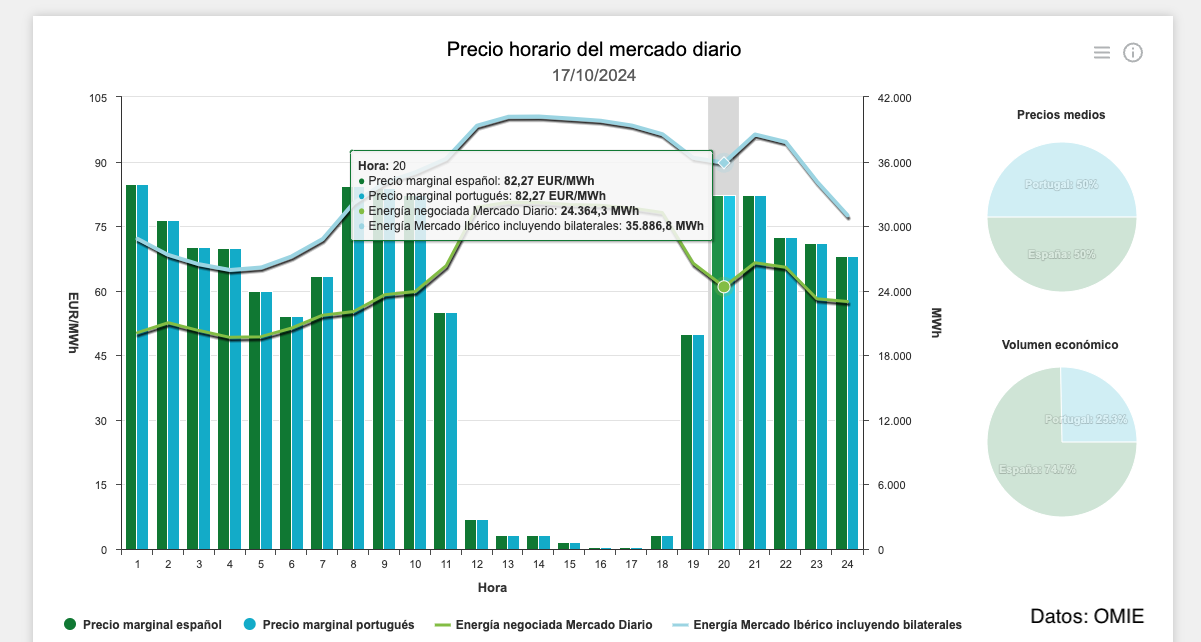
In the previous energy system model, before renewables, retailers' profit came from selling more kWh at a higher price. Nowadays retailers can obtain greater profit if they get their customers to consume more not during the hours of lowest demand, but during the hours when the cost of electricity is cheaper. If retailers help their customers consume during the hours when the cost of energy is cheaper, they get their customers to save while their purchasing costs are reduced, obtaining greater profit. Having an app like Clevergy that helps consumers know the real price of energy at any given moment is really useful for achieving this.
The most advanced retailers are adopting dynamic pricing models, which allow prices to be adjusted according to market fluctuations and mitigate the risk of volatility. This is complemented by demand flexibility solutions, which allow consumption to be optimised based on wholesale prices.
Conclusion
In 2025 electricity retailers will operate in an extremely competitive and regulated environment, where digitalisation, decentralisation and managing market volatility are critical factors for their success. Those that know how to adapt to these changes and offer value-added services, operational flexibility and an advanced digital experience will be better positioned to capture a larger market share and secure their profitability in the coming years. Retaining customers must be even more important than winning new ones. Retailers must accompany their customers on their transition to self-consumption, generating new business, and be clear that energy communities are an excellent opportunity.
At Clevergy, we continue developing advanced solutions to help retailers face these challenges, enabling them to optimise their operations and adapt to a constantly evolving market.