BeClever, October 2024
Welcome to BeClever, Clevergy's energy newsletter! Every month we'll review the main developments in the sector, in this key period for the energy transition. Will you join us?
PNIEC update
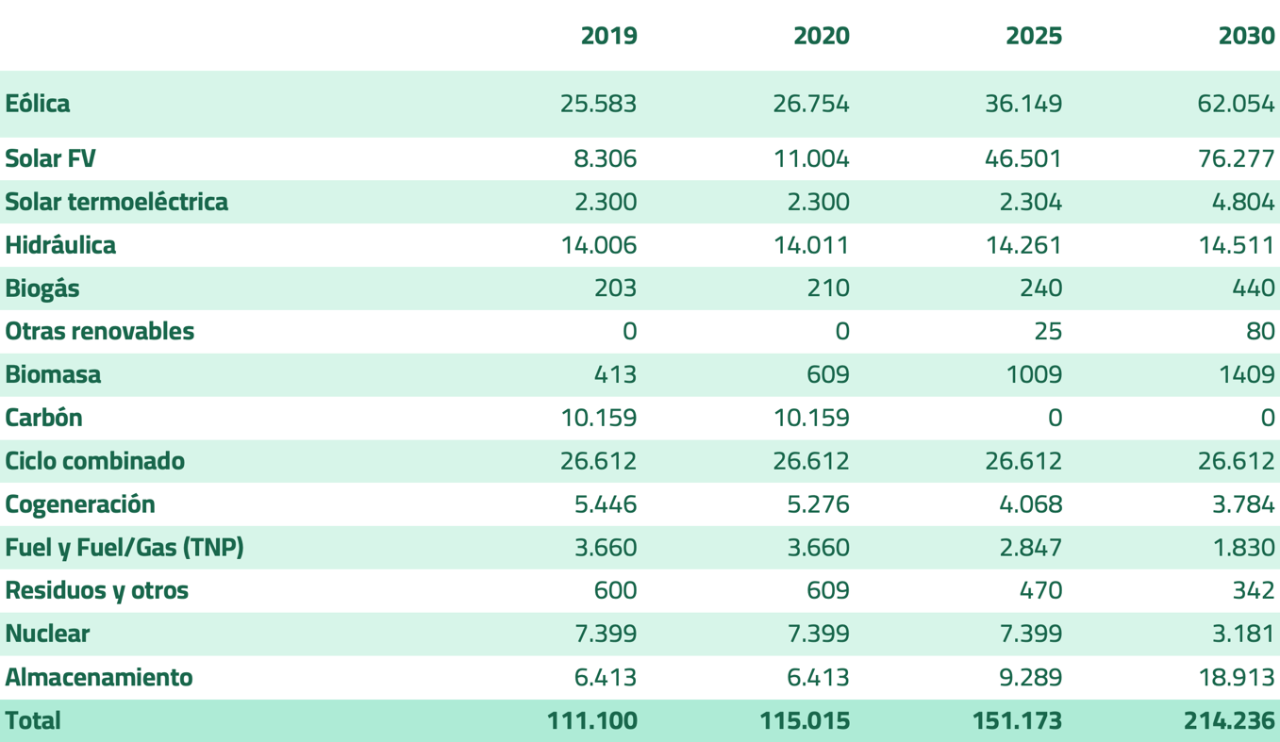
Just a few days ago the Government of Spain updated the PNIEC, the National Integrated Energy and Climate Plan (PNIEC) 2023-2030, with even more ambitious targets than those set out in 2021. With this new plan, renewables are expected to account for 81% of the electricity mix in 2030, when the total installed electrical capacity is expected to be 214 GW, of which 160 GW will come from renewable sources.
The plan entails an investment of 308 million euros, of which 37% will go to renewable energy, 28% to savings and efficiency, 17% to energy grids and 17% to the electrification of the economy. This investment will be 82% private, 18% public and 13% from European funds.
The PNIEC will practically double renewable generation by 2030 in solar PV, wind and storage compared with current figures. In solar PV the goal is to exceed 76GW, including 19GW of self-consumption.
You can download the new full PNIEC in PDF here.
Solar panels on balconies?
The most common solar PV installations are usually located on the roofs of single-family homes and in blocks of flats, but in some countries they are also starting to be installed on balconies. It is not a very common practice in Spain, but in Germany, for example, it is estimated that there are already 500,000 installations of this type, and it is estimated that they could end the year with figures close to a million.
This could be an opportunity or a risk for solar PV installers. The opportunity would lie not only in installing these panels, but in creating energy communities. The risk lies in ultralight panels with batteries that are practically self-installable.
Remember that Clevergy is the perfect ally for solar PV installers and energy communities.
Clevergy, your ally for energy management
Clevergy is the perfect solution for installers and utilities to strengthen relationships with their customers and centralise their operations. Our platform is integrated with the main energy distributors in Spain, so you can access your users' energy consumption data quickly and reliably. This enables more detailed monitoring of energy use, improving the customer's experience and control and the accuracy of savings recommendations or new services.
We have enabled integration with inverters from the brands Goodwee, Fronius, Solis and Growatt, allowing your customers to obtain real-time data on the performance of their installations (power, energy, surplus summary, savings KPIs…) so they can manage self-consumption efficiently.
Other things you should read
- The installation of solar PV seems to have stalled somewhat, owing to falling energy prices and the drop in subsidies. An interesting reflection on “The crossroads of self-consumption” by our CEO, Beltrán Aznar.
- Large energy storage installations are growing rapidly, and will do so even more in the coming years. In self-consumption, batteries are without doubt an important upgrade for solar PV customers, with new manufacturers and better prices.
- The curious technological battle between China and Japan over perovskite panels, and a new technique developed at the University of Oxford that could turn almost any object into a source of solar PV energy.