Smart alerts for solar installations and new sign-up
We start the year with new updates to our solutions: smart alerts for solar installations and the update to the Datadis connection.
Smart alerts for solar installations
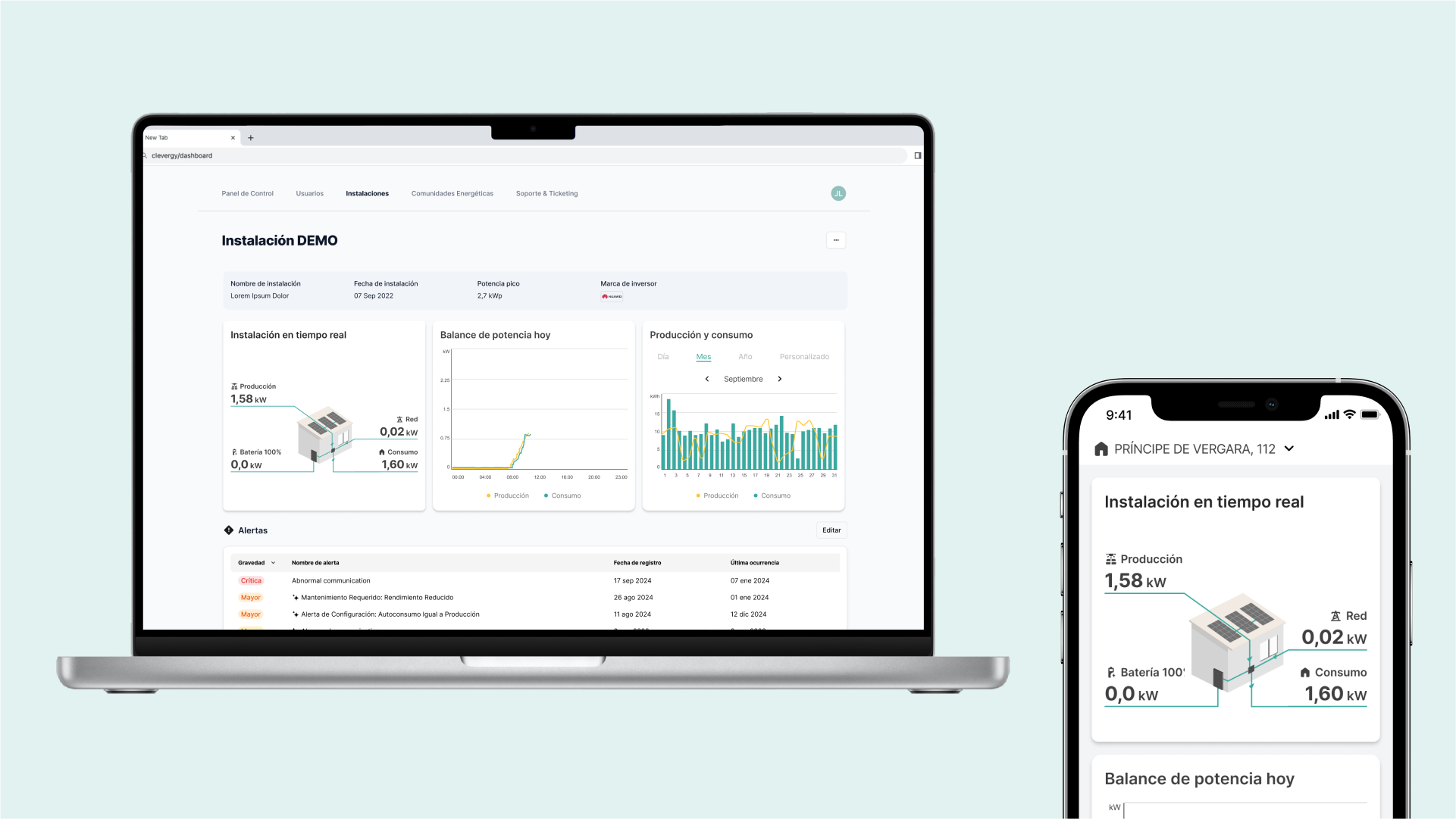
We have developed four new smart alerts that complement and extend the capabilities of the existing Huawei alerts.
What is the difference between the inverter alerts and these smart alerts?
- More data sources: we don't just use inverter data, we also incorporate data from the distributor, the end user and weather data.
- Advanced logic: built by and for installers, these smart alerts turn complicated manual calculations into actionable solutions for hundreds of installations, saving time and improving efficiency.
Why are these alerts different and valuable for you?
- More data, better information: We integrate not only inverter data, but also information from the distributor, the end user and weather conditions. This lets you have a more complete view and make decisions with confidence.
- Made for installers, by installers: Forget about manual calculations and complex processes. These alerts turn data into clear actions, optimising your time and letting you manage hundreds of installations efficiently.
- Advanced logic that gives you an edge: Designed to detect problems before they become a headache, these alerts help you provide a better service to your customers and stand out in the market.
The four new alerts are as follows:
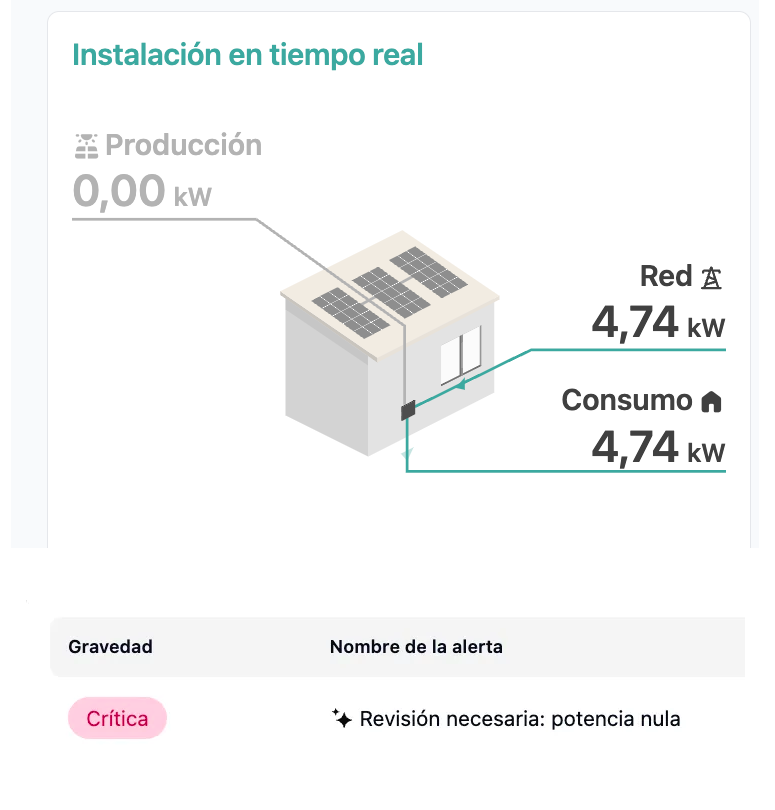
1. Zero inverter power
Triggered when the installation records no production throughout the day
2. Inverter limited with anti-export
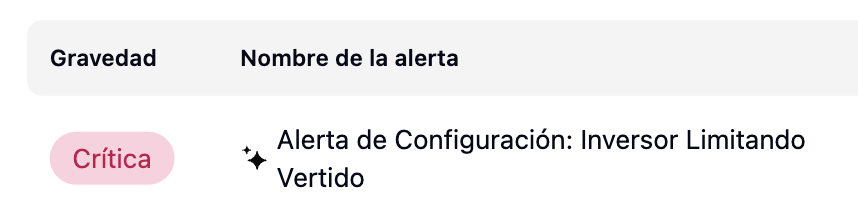
Solar PV installations that are not yet legalised must activate anti-export mode to avoid costs from illegal exports. Sometimes, after legalisation, this mode is not deactivated, which prevents receiving payments for surplus energy.
Two alerts are generated
- When the installation cannot export surplus and is exporting.
- When the installation can export surplus and is not exporting.
3. Performance loss
This alert triggers when an installation performs below 70% of its rated power
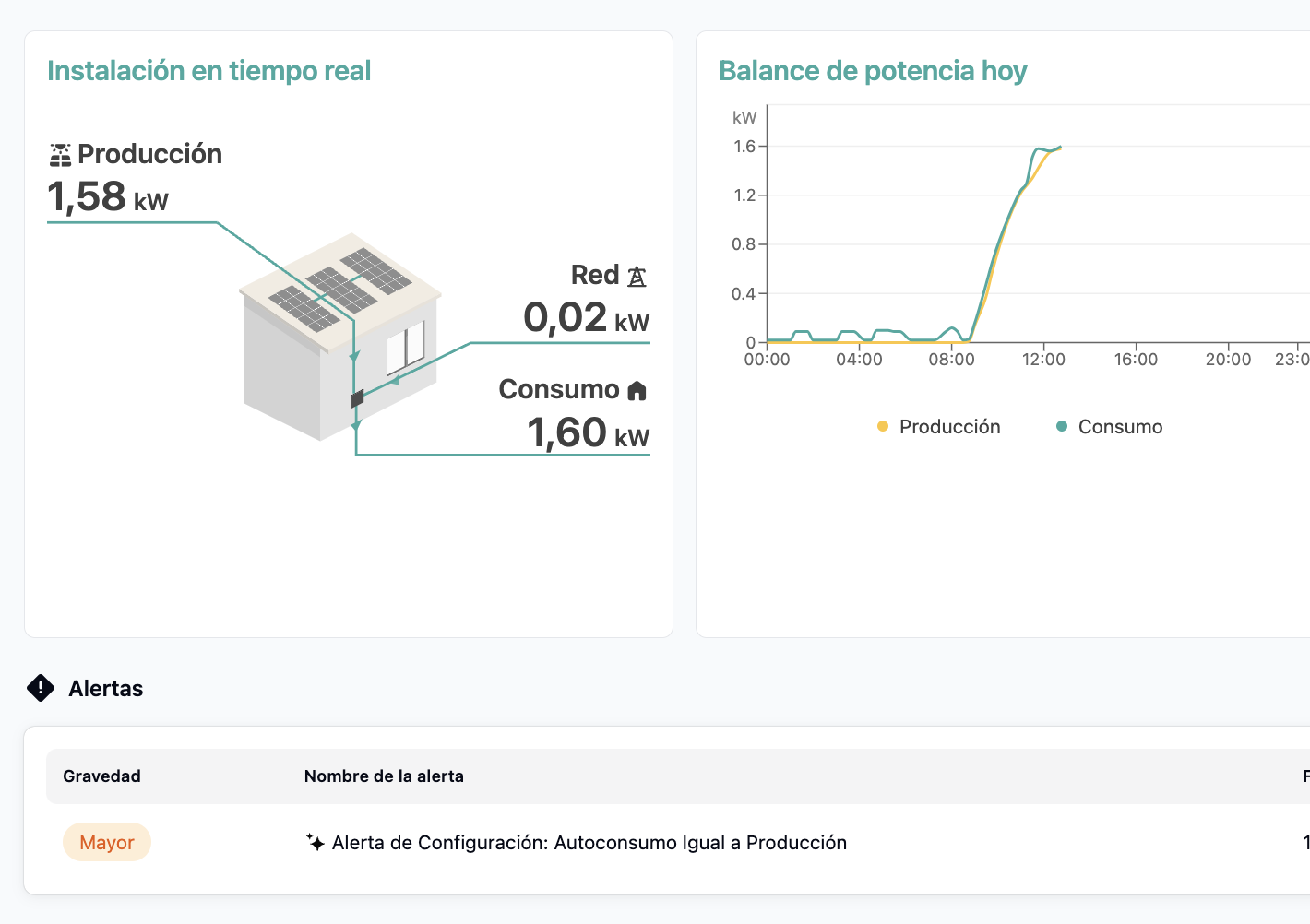
4. Self-consumption equal to production
This alert triggers when a possible error in the clamp installation is detected when the installation shows more than 80% self-consumption. This is uncommon, since supply consumption rarely matches generation perfectly.
Update to the Datadis connection
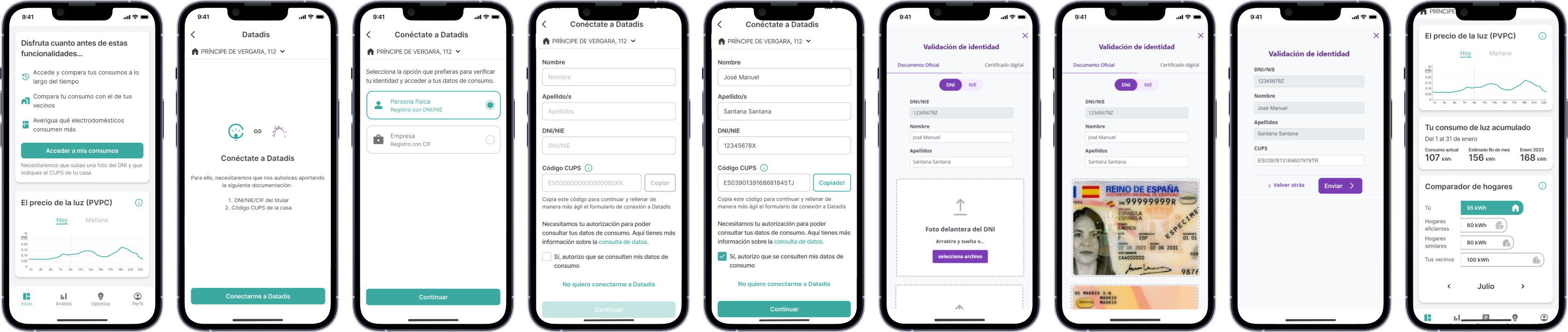
Datadis has implemented a new system to validate authorisations and has asked all partners to follow its validation process.
In addition to the two usual validation methods (ID+CUPS for individuals and Tax ID+CUPS for legal entities), a digital certificate option has also been added (for both individuals and legal entities).
We have changed our flow in the app so that sign-up complies with the new Datadis requirements.
Other updates
We have listened to your suggestions and also added the following improvements:
Portal
- Editable user and household data
- Integration management: it is now possible to add new integrations and delete them
App
- New customisable *onboarding*
- Consumption tips for everyone
- Minor bug fixes